For angel groups
Deal flow for angel groups, without the shared spreadsheet
Neither fits an angel group or a syndicate that screens decks together: each startup gets one record built from its deck, data room and reports, and every member opens the same funnel. It is not a cap table, SPV or payments tool.
Updated
Who it fits, and who it doesn't
It fits
- Angel groups and syndicates whose members look at decks together.
- A group that wants one funnel for everyone, in place of a shared sheet.
- Groups that work in Ukrainian or English.
It is not
- A cap table or a share register.
- An SPV or legal-vehicle tool, or a way to move money.
- A portal for founders: Neither never writes to founders.
From deck to startup profile
- Drop a deck on the funnel or paste its link.
- Neither reads it page by page and fills the startup's profile: team, product, round and numbers, each fact with its page.
- Drop the data room, a folder or a link to it. Each new file updates the profile and says what changed.
- The group reads the profile and decides whether to take the call.
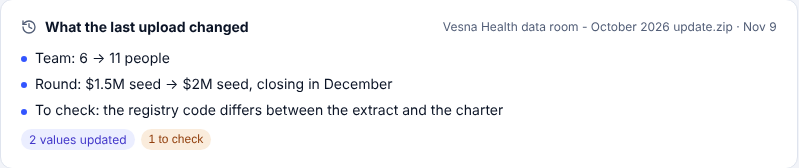
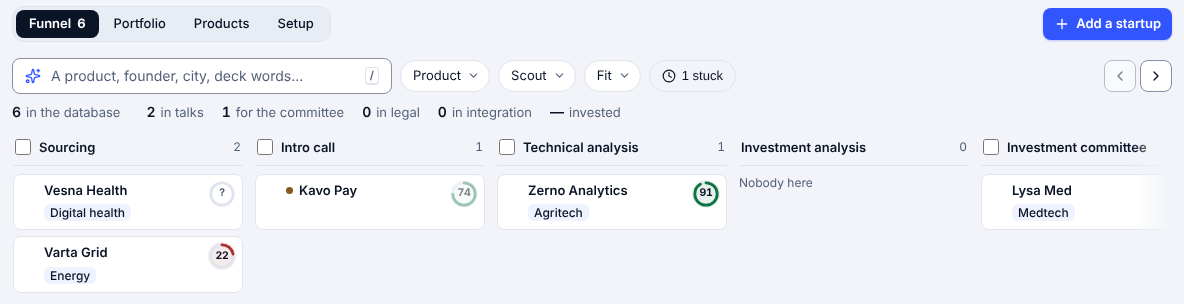
The group's funnel, and who moved a deal
- Every member signs in with their own account. An admin or a partner gives them Investments and a role: viewer, scout, analyst or partner. A viewer reads and changes nothing.
- The whole group sees one funnel board. A scout opens on My board, with only the startups they brought in.
- A startup's history shows each change with the name of the member who made it and when: who added it and who moved it to the next stage.
- A stage is moved by the people you give its role, so only the members you choose move a startup on or record a decision.
- If your group votes, each member votes in their own account: Invest, With conditions, Needs more work or No, with a comment. A member sees how the others voted only after voting. The rule you set (a majority, a set share, or one person decides) records the decision, and nobody votes for someone else.
Cheques and overdue reports after the round
Once the group invests, record each cheque. The portfolio table keeps the cheques and each startup's latest numbers, and shows when a quarterly report is due or late. Drop a report and Neither checks it against the plan and shows what changed since the last one.

Quarterly reports read and tracked
Neither builds the record. You meet the founders and decide.
Questions
What does it cost?
The Investments module is free during early access, with no card.
What do the other members see?
Everyone you give Investments sees the group's startups. A viewer can read and change nothing. A scout works on startups but does not see due diligence results or the money of deals unless you open them in Setup.
Can we see who moved a startup?
Yes. A startup's history lists each change with the name of the member who made it and the time.
Does Neither choose which startups the group backs?
No. It does not pick, rank or value startups, and it never writes to founders. The group meets the founders and decides.
What happens to the spreadsheet we already have?
Export it as Excel or CSV and import it. Each row becomes a startup in the funnel, and you can undo an import for 7 days.
Which languages does it work in?
English and Ukrainian. Profiles are shown in the language you work in.
Try it on one deck
Sign up with Google, add one deck and see the startup's profile fill in.
More work Neither takes off a fund
Use cases
- Pitch decks become startup profiles
- A data room filed and read for you
- Quarterly reports read and tracked